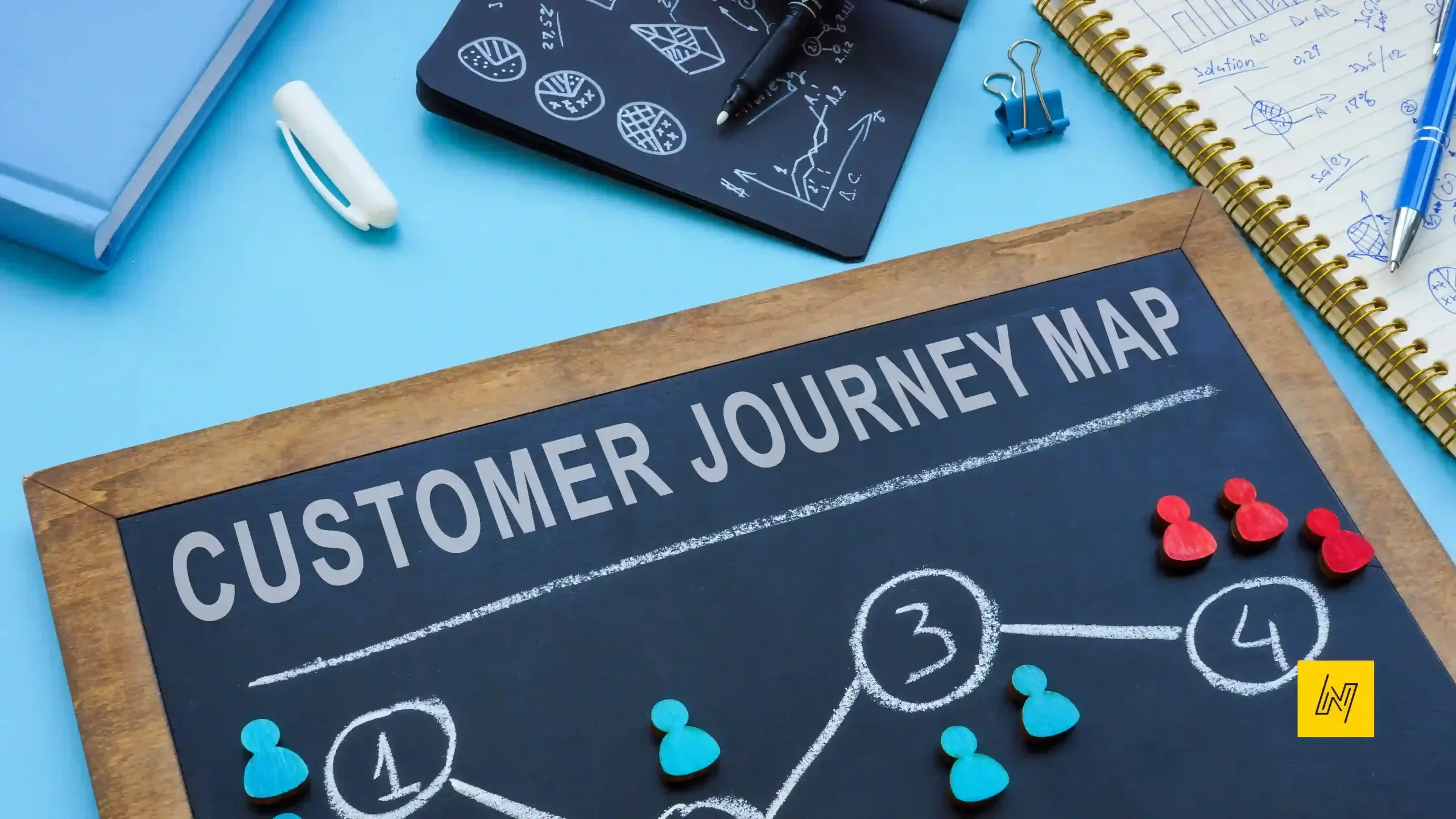
A customer in Singapore finds you on a Tuesday afternoon, halfway through a search for something they can barely name yet. They read a post, click an ad three days later, open an email the following week, and message you on WhatsApp before they ever speak to a person.
By the time they reach your sales team, they have already moved through six or seven moments you arranged without arranging them. Each of those moments was a decision someone in your company made — what to post, when to follow up, which page to send them to — and together they form a path. That path is your buyer journey, and few businesses have ever looked at it directly.
What Is a Buyer Journey, and Do You Already Have One?
A buyer journey is the sequence of stages a person moves through from first noticing a problem to deciding who will solve it. The classic version has three parts: awareness, consideration, and decision, with loyalty and retention extending the path after the sale. Every business that has ever made a sale has moved customers through these customer journey stages, knowingly or not. The question is never whether the journey exists.
These stages run on touchpoints, the specific places a person meets your business. A search result, a blog post, an Instagram caption, a pricing page, a reply to a direct message: each is a point of contact, and each shapes what the buyer believes about you. When you set them down in order, they reveal a decision-making process that was running quietly beneath your daily operations the whole time. Seeing it laid out is the first thing buyer journey mapping does.
Why Do Undesigned Buyer Journeys Lose Customers?
An undesigned journey leaks at the seams nobody mapped. Across organizations, 73% of marketing-generated leads are never contacted by sales, which means much of the interest a business works to create quietly drains away before anyone follows up. The leak is rarely one big hole; it is dozens of small gaps where one stage fails to hand the buyer cleanly to the next. A person fills out a form and hears nothing for a week, and the moment passes.
A common reason is that the tools holding each stage do not reach each other. Companies lose between 20% and 30% of annual revenue to data silos, the separate systems where sales, marketing, and service each keep their own version of the customer. Sixty-two percent of organizations cannot agree internally on what a qualified lead is, so the same person gets treated as urgent by one team and ignored by another. The buyer feels this as friction, even when they cannot name its source.
The cost compounds as the business grows. Employees lose about 12 hours each week chasing information trapped in disconnected systems, time that never reaches the customer at all. Surveys show 76% of customers expect consistent interactions across departments, while only 54% believe those departments share information. That gap between what the buyer expects and what your structure delivers is where the accidental journey loses people.
What Does Buyer Journey Mapping in Singapore Actually Involve?
Buyer journey mapping in Singapore starts with people. You build buyer personas grounded in who your customers really are, then trace how each one moves from first search to final decision across the channels they actually use. In a market where over 89% of residents are active internet users and most journeys begin online, tracing crosses search, social, WhatsApp, and your website inside a single buying decision. The map names every touchpoint and marks where the buyer’s questions go unanswered.
From there the work shifts to content mapping, matching the right message to the stage the buyer is in. Someone in the awareness stage needs a different answer than someone comparing three vendors with a budget already approved. Lead nurturing fills the spaces between touchpoints so interest does not cool while a person waits for a reply. For local businesses, support schemes like the PSG Digital Marketing grant can offset part of the cost of building this properly.
Mapping also exposes the handoffs that quietly break. It shows the moment a lead crosses from marketing to sales, the point where a website visitor should enter your CRM, the place where a buyer’s history should follow them into a conversation. These are the joints of the system, and naming them turns a vague sense that something feels off into a list of specific, fixable gaps. The map is the diagnosis that makes the rest of the work possible.
How Do You Turn a Scattered Journey Into a Connected System?
A map shows you the journey; connecting it makes the journey hold. The discipline for this is customer journey orchestration, which uses live customer data to trigger the right action across channels at the right moment. Where mapping is the picture, orchestration is the picture kept current and acting on itself. It depends on one thing being true underneath: a single, shared view of the customer.
Many companies believe they have that shared view and do not. Marketing holds one profile, sales holds another, and service keeps a case history in a third system, each technically correct and none aligned. Building a real single customer view through CRM integration lets a buyer’s history follow them from an ad to an email to a sales call without anyone repeating themselves. This is the difference between marketing automation that feels personal and automation that sends a discount to someone in the middle of a complaint.
This connected approach has a name in practice, revenue operations, or RevOps, and it is becoming the standard for businesses serious about growth. Gartner expects 75% of high-growth B2B companies to run a formal RevOps model by 2026, and firms with that structure report 36% higher revenue growth than those without it. The same logic supports an omnichannel strategy, stronger customer retention, and the kind of scaling business operations that do not crack under their own weight. A scattered journey can carry a small business; a connected one is what carries a growing one.
Building a Buyer Journey That Holds With Nytelock Digital
The journey your business runs today was assembled one small decision at a time, and it works until growth puts weight on the joints nobody designed. Nytelock Digital works in the layer above the individual tools, turning buyer journey mapping in Singapore into a connected system that holds together as it grows. We make the relationships between your touchpoints explicit, then build the structure that keeps them coherent as more customers move through them. The aim is steady: a journey you can see, measure, and trust to keep its shape under load. When you are ready to look at the path you built by accident and design it on purpose, that is the work we do.